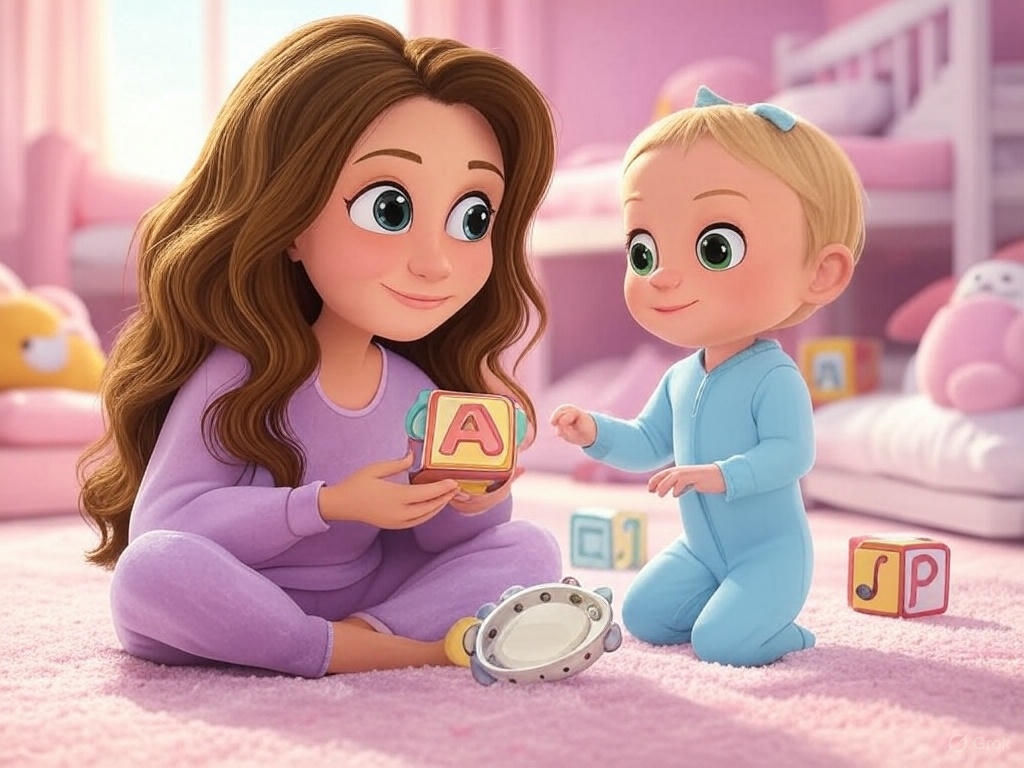
I’ve been pleasantly surprised by how much language growth my daughter has shown in the past couple of weeks after increasing and deepening our literacy lesson time. Our approach is very play-based yet educationally rich. While I’ve heard that children naturally experience an explosion in language development, I can clearly tell that our activities are significantly contributing to this growth.
In just the last week, my daughter said “puppy” when I brought out the “Pp” sound bin, labeled “rainbow” when she pulled out the rainbow from the “Rr” bin, and made the /b/ sound while saying the letter name when we explored the “Bb” sound bin.
Unlocking Language: Our Sound Bin Adventure
I was expecting high interest from the sound bins, but this has exceeded all expectations. We started with three phonics sound bins to focus on each week, following the Heggerty sequence to provide structure without overthinking it. However, my daughter quickly showed interest in more, and now we often explore additional bins that she specifically requests.
I’ve shifted to more interest-based sounds while still maintaining a plan to ensure we don’t accidentally skip any phonemes. I also hope to use these specific sound bins as educational tools for years to come. To keep them in good condition, I use one bin at a time with close supervision. We put each bin away before getting another one out, making them special items for our language time together.
For everyday play, she has other toys and language materials made of wood or other durable materials that don’t break easily.


Tiny Hands, Big Learning: Sound Bins for Your 15-Month-Old
- Allow child to touch and feel items
- Repeat labels and emphasize sounds as an adult
- Incorporate early phonological awareness by stretching simple words to hear parts, emphasizing compound words broken into parts, and tapping out syllables of multi-syllable words on the body
Everything I’m doing is designed in a way that is fun, playful, and developmentally appropriate for my daughter. I expect her to play with, touch, and explore the items. At this point, her receptive language is much higher than her expressive language. I want to give her the opportunity to really hear parts and sounds to create a rich foundation for her language development.
I know it’s working because her interest and expressive output are skyrocketing. She can’t get enough and shocks me daily with what she says or shows me.
Building a Language-Rich Day: Our Winning Routine
This is how we have deepened our language time with impressive results. We also maintain other activities that add tremendous value. Here is what we do daily, or as often as possible:
- Read a minimum of 5 books a day
- Immerse in music daily – singing, dancing, playing instruments, and exploring rhymes through playful songs
- Talk, interact, and play together
- Go on walks and spend time outdoors, naming and discussing what we see
- Explore phonics sound bins
- Use objects or flash cards for vocabulary building
- Engage with developmentally appropriate toys (like KiwiCo)
- Narrate daily activities and routines, building vocabulary through everyday moments
- Incorporate sensory play that encourages language (describing textures, colors, actions)
- Use simple sign language alongside spoken words for key concepts


Stay Connected
Stay tuned for more language exploration. If you have things that you’re doing and love, reach out and share them.
Check out our next blog where we dive into fine motor and early coloring!
Leave a Reply